
Mustapha Ramid clarifies the position of Fiqh and the Constitution on women assuming the head of government role in Morocco

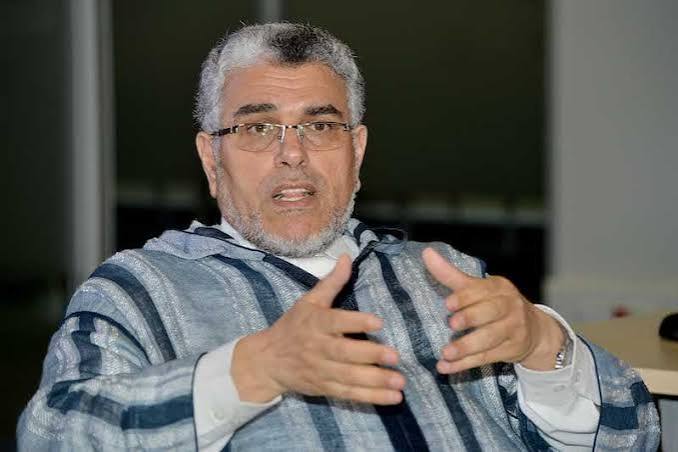
Former Minister of Justice and Liberties, Mustapha Ramid, has engaged with the renewed public discourse regarding women assuming public leadership roles. In a detailed post, he examined the subject from two fundamental angles: the jurisprudence (Fiqh) and the constitutional/institutional perspective.
The Fiqh perspective and the interpretation of texts
Ramid cited the Hadith narrated in Sahih Bukhari and Muslim: «A people who entrust their affairs to a woman will never succeed», explaining that jurists have long differed on whether this text is a general rule or linked to specific historical circumstances concerning the people of Persia.
In the same context, the former minister referred to the story of the Queen of Sheba as told in the Holy Quran, viewing it as clear evidence of wisdom and sound management, particularly through her practice of consulting her elders and her dedication to avoiding the option of war.
Ramid also pointed to another jurisprudential opinion which holds that women have the full right to assume various public offices, with the sole exception of the supreme authority, citing the Hadith: «A woman is a guardian in her husband’s house and is responsible for her charge.»
The constitutional approach and public affairs management in Morocco
On the constitutional level, Ramid considered that the nature of the modern state is based on institutions and the sharing of competencies, which makes the responsibility of any official, whether man or woman, strictly framed by the legal and constitutional powers granted to them.
Regarding the Moroccan case, Ramid emphasized that the Kingdom’s constitutional system is primarily based on the criterion of competence in managing public affairs, regardless of the gender of the official, with the single exception of the Head of State, which is closely linked to the Throne and the Commander of the Faithful as explicitly stipulated by the Constitution.
Ramid concluded his post by stating that the position of Head of Government has no relation, according to his assessment, to the mentioned Hadith, stressing that the Moroccan constitutional choice enshrines the principle of equality between men and women in assuming public responsibilities, except for what the Constitution explicitly excludes regarding the succession to the Throne.






💬 Share your opinion
We welcome constructive opinions and ask you to maintain politeness.
0 comments