Akhannouch in the spotlight: Embarrassing questions about the viability of importing 800,000 sheep

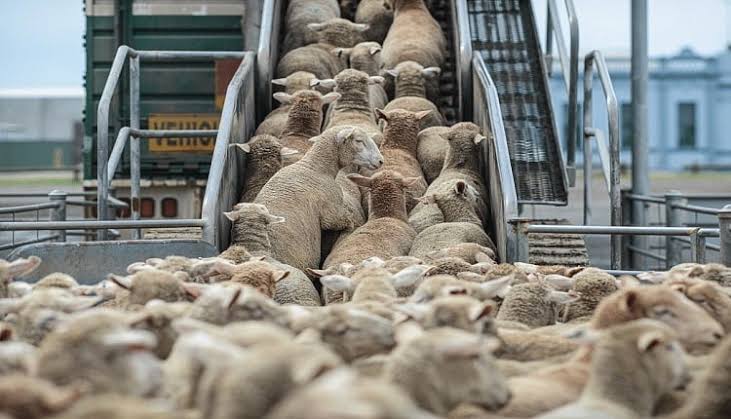
Legitimate questions regarding the management of sheep imports
Head of Government Aziz Akhannouch has placed the file of sheep imports back at the forefront of public debate, attempting to offer justifications for a government decision that continues to spark controversy. While the official discourse holds onto “drought” as the sole key to explaining all measures taken, the Moroccan citizen continues to raise heavy questions about the nature of the management of this contentious issue.
400 million dirhams: Investment or waste?
The math is simple but worrying; importing 800,000 sheep with a subsidy reaching 500 dirhams per head means that the public treasury has shouldered nearly 400 million dirhams. This massive figure is not just a technical detail, but public money for which Moroccans demand full transparency. Who are the beneficiaries? Did this support actually reflect on the consumer’s purchasing power, or was it merely “filling a gap” without positive effects on the ground?
Drought is not a “blank check”
It is clear that the government is relying on a simplistic duality suggesting the choice was limited to either importing sheep or losing the sacrifice. However, crisis management requires a more comprehensive vision that includes supporting breeders, protecting female livestock, and developing distribution chains. Reducing the dilemma of the national herd to “importing sheep” reflects a justification for public policy rather than an objective evaluation, which raises fundamental questions about the effectiveness of the government strategies adopted.
The Moroccan breeder: The silent victim
If the government is raising the banner of protecting animal wealth, how can we explain the disregard for the suffering of the Moroccan breeder who faced drought and rising feed costs alone? Directing support to importers instead of local breeders opens the door to questions about the utility of these policies: Was the goal to save the market at a sensitive political moment, or to protect the national herd in the long run?
Demanding transparency and real figures
After the decision to cancel the sacrificial rite the following year, the feeling among citizens that the situation required a rigorous evaluation of previous years has deepened. It is no longer enough to use the number of 800,000 sheep as proof of success; what is required is to disclose the real outcome: Where did the money go? What is the size of the herd today? Has the situation of the breeders improved? The right of Moroccans to accountability goes beyond rhetorical justifications, reaching the demand for precise numbers and concrete facts showing how their money was spent and how their crisis was managed.




💬 Share your opinion
We welcome constructive opinions and ask you to maintain politeness.
0 comments