
National Crime Observatory and ‘Moussalaha’ program: Key themes in Morocco’s participation in Abu Dhabi

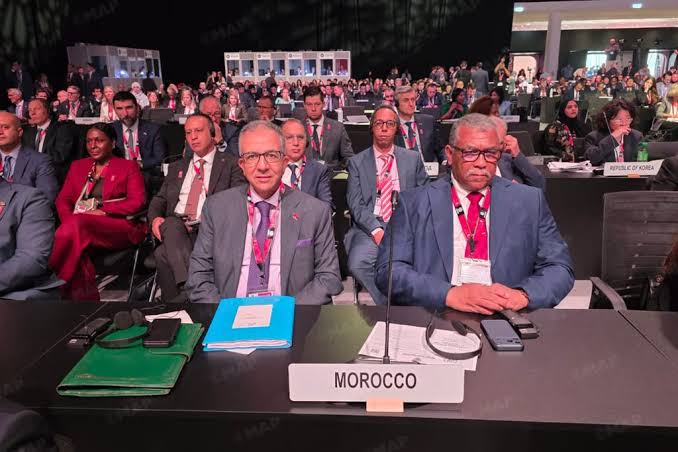
Presenting the National Criminal Justice Strategy
During the 15th United Nations Congress on Crime Prevention and Criminal Justice in Abu Dhabi, Morocco showcased its pioneering experience in evidence-based crime prevention. The Director of Criminal Affairs and Pardons at the Ministry of Justice, Hicham Mellati, explained that the Kingdom’s penal policy is built on a forward-looking, evidence-based, and human-centered justice system.
The Moroccan official reaffirmed the Kingdom’s commitment to prioritizing crime prevention through a dual approach: proactive monitoring and recidivism reduction, while emphasizing the importance of integration with public policy and civil society involvement.
The Role of the National Crime Observatory and Crime Mapping
Mellati highlighted the establishment of the National Crime Observatory as an institutional mechanism for data-driven criminal policy. It provides authorities with a reliable knowledge base to develop and evaluate penal policies through a participatory approach involving judicial institutions, national security, the Royal Gendarmerie, and academia.
He also noted the ongoing implementation of the National Crime Map, an accurate digital tool allowing for the geolocation of crimes and the monitoring of trends, which supports decision-making and enhances the targeting of preventive measures at the territorial level.
A Human-Centered Approach and Strengthening Social Assistance
Regarding the social aspect of criminal justice, Mellati highlighted that the Moroccan system adopts a human-centered approach, whether for victims or perpetrators. Over 500 social workers have been deployed in courts to support victims throughout the judicial process, alongside the establishment of dedicated units for women and children victims of violence and shelters for victims of human trafficking.
‘Moussalaha’ Program as a Model for Extremism Prevention
Finally, Mellati discussed the “Moussalaha” program as a distinctive Moroccan model for preventing extremism and reducing recidivism, launched in 2017 by the General Delegation for Prison Administration and Reintegration in partnership with the Rabita Mohammadia of Ulema and the National Human Rights Council.
He reported that the program has organized 20 sessions for 480 inmates to date, with zero recorded cases of recidivism among beneficiaries, reflecting the great effectiveness of this humanitarian and intellectual approach.






💬 Share your opinion
We welcome constructive opinions and ask you to maintain politeness.
0 comments