
How Bank Al-Maghrib Plans to Protect the Financial System from the Impact of Drought and Climate Fluctuations

Technical Partnership to Strengthen the Resilience of the Moroccan Financial Sector
In a step aimed at strengthening the resilience of the financial sector in the face of environmental transformations, Bank Al-Maghrib and the European Investment Bank signed a technical cooperation agreement in Rabat. This agreement focuses on supporting the Moroccan Central Bank in developing accurate mechanisms to measure and monitor climate change risks, and developing banking supervision tools to ensure the stability of financial institutions.
Climate Stress Tests: Simulating Difficult Scenarios
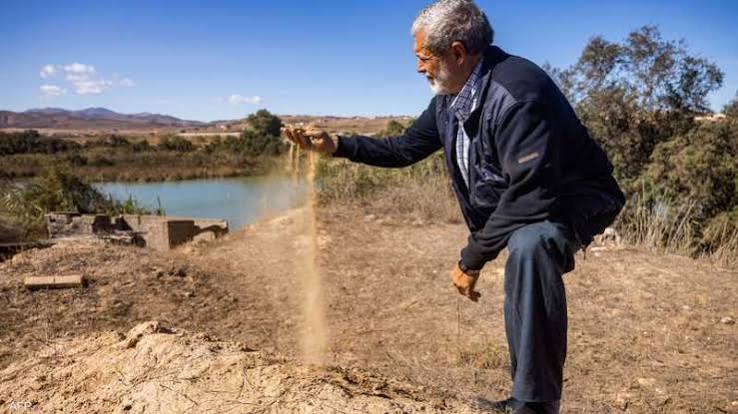
The core of this cooperation focuses on implementing what is known as “climate stress tests”. These technical exercises are a means to simulate the impact of extreme weather events, such as consecutive years of drought, on the loan portfolios of banks. According to the announced data, the objective is to understand how a decline in revenues of companies dependent on rainfall can affect their ability to repay debts, and thus transfer these burdens to the banking system that finances them.
Technical Support and International Expertise
Under this agreement, the international branch of the European Investment Bank will provide the necessary technical support by exchanging experiences with international regulatory bodies. The Governor of Bank Al-Maghrib, Abdellatif Jouahri, pointed out that this step comes as a culmination of proactive measures previously taken by the Central Bank to integrate environmental and climate dimensions within banking supervision, in proportion to the nature of the national economy and the sectors most vulnerable to climate fluctuations.
Future Horizons for Moroccan Enterprises
Although the agreement is currently limited to technical and regulatory support and does not include direct funding or new loans, it carries strategic objectives in the medium and long term. The program aims to improve the capacity of financial institutions to assess the needs of enterprises, particularly small and medium-sized enterprises, which are the most vulnerable to the direct impact of climate change. This initiative is part of a broader international program to support green financial systems, directly supported by Germany and Luxembourg.




💬 Share your opinion
We welcome constructive opinions and ask you to maintain politeness.
0 comments