Spanish Media Campaign Against Morocco’s 2030 Bid: The Kingdom Responds with Concrete Achievements

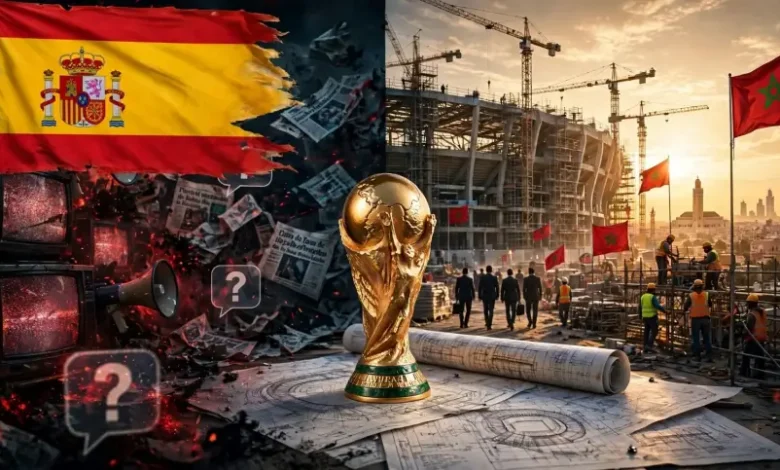
Morocco continues to gain FIFA’s trust, away from the noise of competitors
At a time when the pace of sports and diplomatic competition for organizing the final of the 2030 World Cup is intensifying, some Spanish media outlets have turned into platforms for launching campaigns of doubt aimed at hindering Morocco’s progress. This coincides with the approach of the new inspection visit by the FIFA delegation to the Kingdom, scheduled for November 28.
Despite the attempts to disrupt, which raise questions about their timing and underlying motives related to the battle to host the final match, Morocco has chosen to respond with a strategy of “quiet actions”, relying on the language of figures and field projects that speak for themselves. This comes as observers note the continuation of hostile campaigns, sometimes fueled by media noise that aligns in its objectives with the narrative of the Algerian regime, which consistently seeks to undermine Moroccan achievements in various international forums.
Major projects exceeding expectations
Field data indicates that the pace of work in the six candidate cities (Rabat, Casablanca, Tangier, Marrakech, Agadir, and Fez) is progressing remarkably. Morocco has not only adhered to the set schedules, but several projects have exceeded the established targets thanks to a comprehensive national mobilization.
This dynamic centers on modernizing sports facilities, developing transport and railway networks led by the National Railways Office (ONCF), and increasing the capacity of airports and hotels. This confirms that the preparations for the World Cup are not just a passing event, but a lever for sustainable development spanning various regions of the Kingdom.
The gamble on quality and sustainability
It is worth noting that the initial visit by FIFA officials left very positive impressions regarding the quality of the designs and the feasibility of execution. This dynamic is part of a clear strategic vision led by His Majesty King Mohammed VI, which aims to involve all sectors, institutions, and public authorities.
These ambitions are not limited to major cities, but extend to other towns that will host team training camps, ensuring a fair distribution of economic and tourism benefits. While some media outlets on the other side of the strait choose to sow doubt, Morocco continues its confident march, turning the World Cup projects into a Moroccan success story that solidifies the Kingdom’s position as a sporting and economic hub that needs no “noise” to prove its worthiness to host the world’s largest football event.

💬 Share your opinion
We welcome constructive opinions and ask you to maintain politeness.
0 comments