
Questions raised over the impact of falling fuel prices on Moroccan citizens’ purchasing power

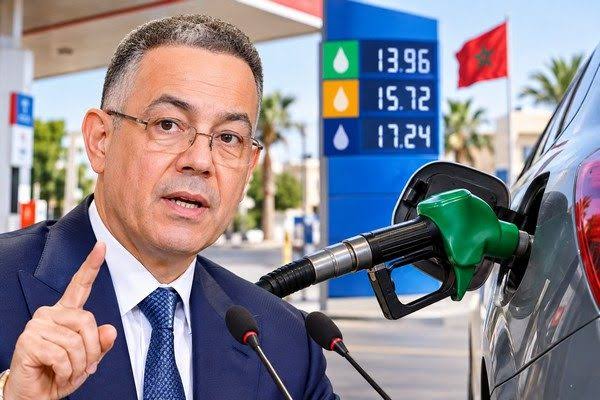
Slight decline in fuel prices raises questions among Moroccan public
Fuel prices in Morocco have recently experienced a slight and varying decrease across different gas stations and distribution companies, as part of the usual bi-monthly update. This reduction, ranging from 20 centimes for diesel to 50 centimes for gasoline with some operators, while others recorded a decline of up to 29 centimes for diesel and 61 centimes for gasoline, comes at a time when Moroccan households and professionals are anticipating its impact on transport costs and consumer products.
Close link between fuel costs and commodity prices
Fuel is a fundamental element in the pricing of goods, especially in the transport sector, which has recorded a significant rise in its index. Official data from the High Commission for Planning (HCP) indicate that the transport sector has been one of the most affected by inflationary pressures in recent months. However, experts emphasize that the impact of reducing a few centimes may remain limited on the final price of consumer goods, since transport costs represent only a portion of the final price structure, which is influenced by other factors such as wages, profit margins, and storage costs.
Factors behind the slow transition of price reductions
Professional data suggest that the price drop does not immediately reflect on the markets due to the logic of “inventory clearance”, where merchants need to sell stock acquired previously at a higher cost before adopting new prices. Furthermore, fluctuations in food prices, such as vegetables and meat, remain subject to the logic of supply and demand and seasonal factors to a greater extent than their direct exposure to fuel prices.
Context of tax debate on the fuel sector
This decline coincided with an intensive parliamentary debate on the 2027 Finance Bill, specifically regarding the proposed 40 percent tax on the profits of fuel companies. In this regard, the Minister of Economy and Finance, Fouzi Lekjaa, stressed during the bill’s adoption session that prices are determined based on international data, taxes, and profit margins, highlighting that the government is considering options for capping profit margins as a potential measure to protect citizens’ purchasing power.
Inflation indicators under the microscope
Inflation data issued by the High Commission for Planning remain the actual benchmark for measuring the impact of these fluctuations. While the core inflation index has recorded relative stability, the non-food prices remain under continuous pressure, making the evolution of indicators for October and November the “true test” of whether these changes are felt in consumers’ pockets, far from theoretical projections.






💬 Share your opinion
We welcome constructive opinions and ask you to maintain politeness.
0 comments