
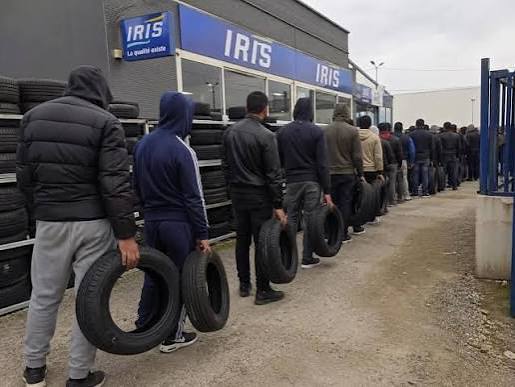
Algerian households are facing an unprecedented wave of price hikes in fruit and vegetables, a crisis that has pushed basic commodities to record levels, far exceeding the purchasing power of large segments of the population. This crisis is not limited to imported or seasonal products, but extends to vegetables that should be fully covered by domestic production. This raises major questions about the effectiveness of agricultural planning, the high cost of inputs, distribution inefficiencies, and the limitations of arbitrary import restriction policies.
Record figures burden consumers and expose planning failures
In retail markets, the price of fennel has reached about 190 Algerian dinars per kilogram, while eggplant has reached 170 dinars, and peppers (both sweet and hot) are around 150 dinars. Poultry meat has risen to nearly 500 dinars per kilogram, adding direct pressure to the daily food basket. In the fruit market, grapes and nectarines have jumped to 450 dinars per kilogram, pears have hit 500 dinars, and apples have soared to 600 dinars per kilogram.
Fragility of the agricultural system and the impact of import policies
Data confirms that these exorbitant prices do not reflect normal market fluctuations, but highlight a structural gap between production, distribution, and demand. For years, Algeria has focused on reducing imports without providing the necessary local alternatives. Experts attribute this瘋 price surge to the high cost of fertilizers and seeds—largely dependent on imports—as well as poor planning and the departure of some farmers, creating temporary shortages that fuel speculative networks.
Reflections of diplomatic crises and trade restrictions
The Algerian regime persists in a strict policy of rationalizing imports to protect foreign currency reserves. While marketed as a way to reduce the import bill and boost local production, this approach has proven costly due to the lack of sufficient local alternatives. For tropical fruits like bananas, prices have been heavily impacted by import rules, exchange rates, and transport costs. Furthermore, the external trade sector has suffered significant blows due to diplomatic tensions manufactured by the Algerian regime with several commercial partners, accompanied by banking and trade restrictions that have directly disrupted supply chains and market stability in the country.






💬 Share your opinion
We welcome constructive opinions and ask you to maintain politeness.
0 comments