
Secrets of the Al-Zmij Season: ‘Foot-kissing’ rituals spark controversy in the suburbs of Tangier

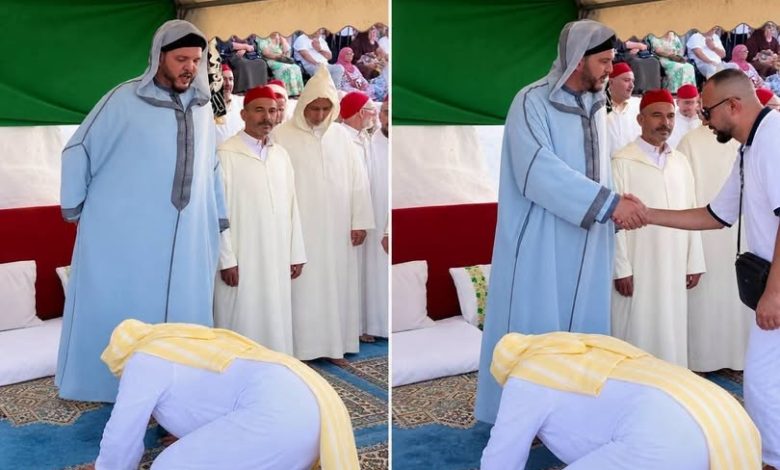
Heritage that raises questions: What is behind the Al-Zmij season rituals?
Deep within the villages surrounding Tangier, specifically in the Al-Zmij region, customs and rituals emerge every year with roots deep in the region’s popular history. However, what distinguishes this year’s “Al-Zmij season” is the escalation of debate surrounding certain practices that some see as “strange” and crossing familiar religious and social norms, most notably the ritual of foot-kissing.
Ceremonies of loyalty and veneration at the heart of the tribe
According to the locals, these rituals are an integral part of the spiritual heritage that connects followers to the “Zaouia” (Sufi lodge) or to figures with high symbolic status. Participants see in foot-kissing an expression of absolute humility and veneration, while observers and social activists argue that these behaviors reflect the persistence of patterns of loyalty that spark much controversy in contemporary Moroccan public space.
Events during the Al-Zmij season attract large crowds from various regions, where “Baraka” (blessing) mixes with festive rituals. Nevertheless, the emergence of unusual practices has divided opinion between those who consider it a “freedom to exercise traditional rites” and those who view them as “alien displays that contradict human dignity.”
Sociological perspective: Authentic customs or distortion?
Researchers in Moroccan anthropology consider such seasons a vent for rural identity, yet rituals like foot-kissing always pose a dilemma regarding human rights and intellectual scrutiny. Experts emphasize that these practices often find fertile ground in areas characterized by strong ties to Sufi brotherhoods, where folk beliefs blend with inherited traditions, making it difficult to separate the “sacred” from the “socially inherited.”.
Between individual freedom and criticism of traditional practices
The issue of the Al-Zmij season remains present in digital and social discussions in the Tangier-Tetouan-Al Hoceima region. While organizers insist that the rituals take place with the full mutual consent of the parties, activists demand a review of these practices, which may harm the image of Moroccan popular heritage. This annual season remains a living laboratory for studying the conflict between modernity and tradition in the rural society on the outskirts of Tangier.




💬 Share your opinion
We welcome constructive opinions and ask you to maintain politeness.
0 comments