
Lawyers’ crisis in Morocco: Kingdom’s courts paralyzed awaiting Constitutional Court ruling

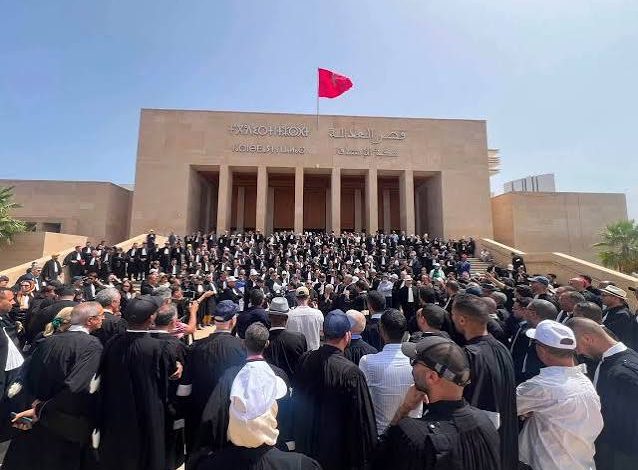
The courts of the Kingdom of Morocco are experiencing near-total paralysis and unprecedented tension following protest actions and escalated struggle by lawyers in response to provisions in the new draft law on the legal profession. An atmosphere of cautious anticipation prevails in the corridors of justice while awaiting the Constitutional Court’s rulings on the constitutionality of the controversial articles in the legislative text.
Unprecedented congestion and judicial paralysis
The lawyers’ boycott of hearings and registry offices has disrupted the interests of thousands of litigants, pushing the judicial system into a state of severe stagnation. Professionals in the sector believe that the current version of the draft law strikes at the core of the independence of the legal profession and harms the rights of defense, prompting the Association of Bar Associations in Morocco to take a firm stance by fully suspending consultative and litigation services until their demands are met.
The Constitutional Court: The final say on controversial articles
All eyes are currently on the Constitutional Court to rule on the appeals and observations raised regarding the draft law. The main points of contention focus on the new conditions for entering the profession, the nature of the oversight that the government authority in charge of justice seeks to impose on the bars, as well as regulatory and financial provisions that professionals consider an unjustified restriction on judicial work and a regression in human rights gains.
Justice challenges and prospects for ending the crisis
Legal experts emphasize that the expected decision of the Constitutional Court is a pivotal moment that will shape the future of the justice system in Morocco. While the Ministry of Justice maintains its desire to modernize the system and improve judicial performance, lawyers demand legislation that respects international conventions and the historical specificity of the profession, while opening a path for serious dialogue to reach a consensual formula that ensures the dignity of the defense and the protection of citizens’ rights before the judiciary.






💬 Share your opinion
We welcome constructive opinions and ask you to maintain politeness.
0 comments