Migration to Ceuta and Melilla: Controversy Surrounding the ‘Algerian Number’ and Geopolitical Interpretations

Controversial Context: Spanish Intelligence Under Scrutiny
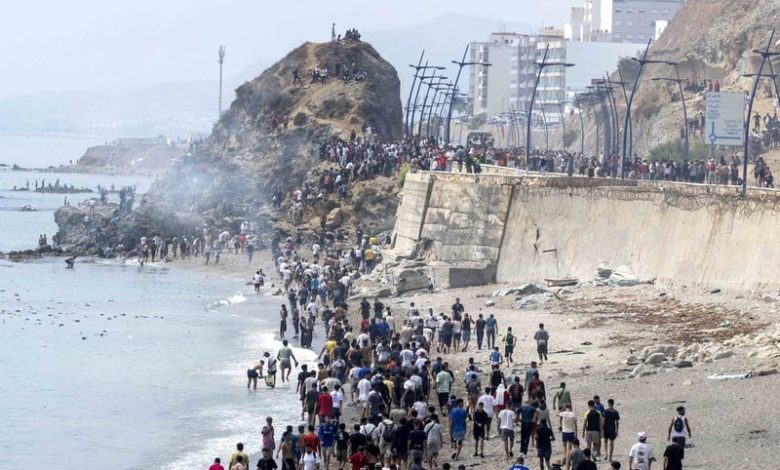
In a move raising questions about the motivations behind institutional reports, a recent analytical note from the MigraPress center has criticized how Spanish intelligence services handled the mass crossing attempts into the occupied cities of Ceuta and Melilla in late July. The note issued sharp criticism regarding the Spanish report’s emphasis on a minor technical detail: a phone number with an international Algerian code (+213), arguing that this “spotlight” aims to impose a political and geopolitical narrative that far exceeds its value as material evidence.
The ‘Algerian’ Number: Technical Fallacies and Political Exploitation
The note clarifies that the Spanish report focused on the identity of a WhatsApp group administrator who was coordinating migrants and meeting points. Although the number carries the Algerian dialing code, MigraPress stressed that this fact offers no proof of the Algerian state’s involvement in these operations. The note emphasized that virtual numbers are now accessible to anyone online, making the attempt to link these numbers to specific countries an “intentional narrative” designed to fuel regional tensions under the guise of security.
Deconstructing the “Murmuration” Metaphor
The critique extended beyond phone numbers to the “conceptual framing” adopted by Spanish intelligence, which used the “murmuration” metaphor to describe collective movements. According to the center, the goal was to present migration as a decentralized phenomenon managed by algorithms, in an attempt to bypass the existence of human leadership. However, the note points to an internal contradiction in the report, which acknowledged direct, personal coordination, thereby undermining the hypothesis of absolute “digital spontaneity.”
Calls for a Holistic Reading of the Phenomenon
The note concludes that the Spanish report is not a “raw document” but the product of a series of mediations subject to a specific viewpoint. Therefore, the note calls for: First: caution in dealing with security information leaked to the media. Second: moving beyond the narrow security-focused approach that links migration exclusively to geopolitics. Third: the necessity of addressing the social, economic, and human rights dimensions that drive migrants to choose crossing, far from conspiracy theories that attempt to turn migration into a pressure card in regional conflicts that the migrant has nothing to do with.





💬 Share your opinion
We welcome constructive opinions and ask you to maintain politeness.
0 comments