
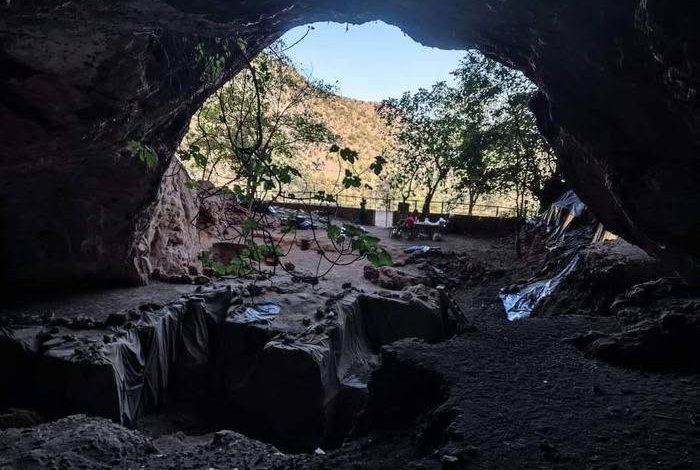
Jebel Irhoud and Taforalt: Physical evidence telling the story of Homo sapiens in ancient Morocco

Shifts in Scientific Research on the History of Early Humans
A recent study published in the prestigious scientific journal “Nature” has sparked wide academic debate regarding the pathways of human evolution. The study relied on advanced techniques in organic chemistry to analyze proteins found in nine human teeth discovered in China, dating back between 324,000 and 184,000 years. The results concluded that these remains mostly belong to Homo erectus, with one exception that remains outside the scope of standard classifications, indicating the continued existence of this human species for periods much later than previously thought.
The Importance of Protein Analysis Technique
The essential importance of this discovery lies in the advancement of laboratory methods, as experiments have proven that proteins found in teeth can survive for thousands of years, providing an effective alternative to ancient DNA, which is often difficult to detect or analyze due to preservation conditions. This technical development opens new horizons for researchers to decode the human groups that lived in overlapping geographical spaces during the same time period.
Morocco: A Living Laboratory for Studying Evolution and Culture
In a related context, archaeological discoveries in Morocco stand out as an exceptional model for understanding the relationship between biology and material culture. Moroccan sites, with their richness and diversity, offer physical evidence linking the remains of ancient humans to the tools they made, reinforcing the hypothesis of cultural continuity. This can be observed through three main milestones:
1. Casablanca Sites: Dating back to the Lower Paleolithic, where human remains were found alongside stone tools dated to more than 700,000 years ago.
2. Jebel Irhoud: Which presented to the world the oldest known remains of Homo sapiens alongside sophisticated flint tools dating back more than 300,000 years.
3. Taforalt Site: Which houses the largest ancient cemetery in North Africa, dating back about 15,000 years, signaling a boom in the material and symbolic production of humans during that period.
Biology versus Material Culture
Analysis indicates a difference in pace between biological evolution, which is characterized by slowness, and “material culture” represented by tools and symbols. While biological records may show gaps, material discoveries in Morocco show remarkable continuity; indeed, major interruptions in tool technologies and their symbolic functions only emerge in limited time periods. The accumulation of data from archaeological excavations in Morocco, supported by the development of laboratory methods, places the region at the center of gravity for understanding the history of human settlement, confirming that the genius of early humans in this land remained connected and impressive over thousands of years.





💬 Share your opinion
We welcome constructive opinions and ask you to maintain politeness.
0 comments