National Road Safety Agency to leverage urban surveillance cameras for traffic enforcement

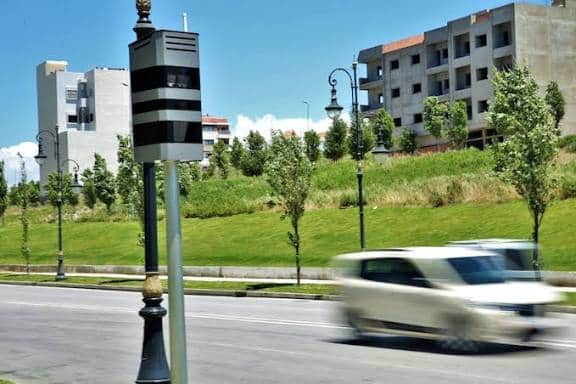
The National Road Safety Agency (NARSA) is moving to expand automated traffic monitoring by exploring the use of urban surveillance cameras to detect traffic violations and issue citations, in coordination with the General Directorate of National Security (DGSN). This initiative could transition these devices from their traditional security function to a direct role in enforcing traffic laws in public spaces.
Indicators of the NARSA 2027 Action Plan
According to the agency’s 2027 action plan, the project is based on utilizing existing surveillance camera networks already installed in several Moroccan cities. Competent authorities will implement this mechanism once the necessary conditions are met, though a final decision on the timeline for nationwide deployment has not yet been reached.
This initiative is highly significant given the extensive video surveillance network managed by the DGSN in major metropolises, including Casablanca, Rabat, Marrakech, Fès, Meknès, Agadir, Tétouan, Safi, and Oujda, where technical capabilities are continuously being upgraded.
Technical developments and legal challenges
In its 2024 annual report, the DGSN revealed the continued rollout of an integrated video surveillance system using artificial intelligence and automatic license plate recognition. While not currently used exclusively for traffic enforcement, this infrastructure opens the door for future applications in road safety, such as detecting red-light violations, illegal parking, and mobile phone use while driving, subject to technical capabilities and the regulatory legal framework.
Accident statistics and project context
This discussion comes at a time when the number of traffic accidents in Morocco remains alarming. In 2025, 4,786 deaths were recorded, while the first seven months of 2026 saw 2,735 fatalities—a 13.3% increase compared to the same period the previous year, according to the NARSA report. As authorities rely on technology to curb violations, the main challenge remains ensuring fair law enforcement that respects driver rights and data protection.






💬 Share your opinion
We welcome constructive opinions and ask you to maintain politeness.
0 comments