Washington shifts AI to national security and announces new intelligence-led strategic force

Strategic pivot in the Trump administration toward technical national security
U.S. President Donald Trump has announced the formation of the «Superintelligence Force» (SIF), a move reflecting a radical shift in how the government handles artificial intelligence. This file, which for years was viewed merely as a technological and economic issue led by «Silicon Valley», is now seen within the U.S. administration as a matter of «national security» and an essential tool for strategic competition with China.
Trump has entrusted the leadership of the new task force, which is tasked with assessing the risks and opportunities of this technology, to Director of National Intelligence Jay Clayton. The team includes prominent figures such as Vice President J.D. Vance, Secretary of Defense Pete Hegseth, and Secretary of the Treasury Scott Bessent.
Goals and missions for the new force within 120 days
In a post on his «Truth Social» platform, Trump explained that the new force will coordinate federal government efforts to ensure «America’s global leadership in the field of superintelligence». It will also work to organize and coordinate the government’s engagement with consumers, public interest groups, religious organizations, critical infrastructure operators, and major AI companies.
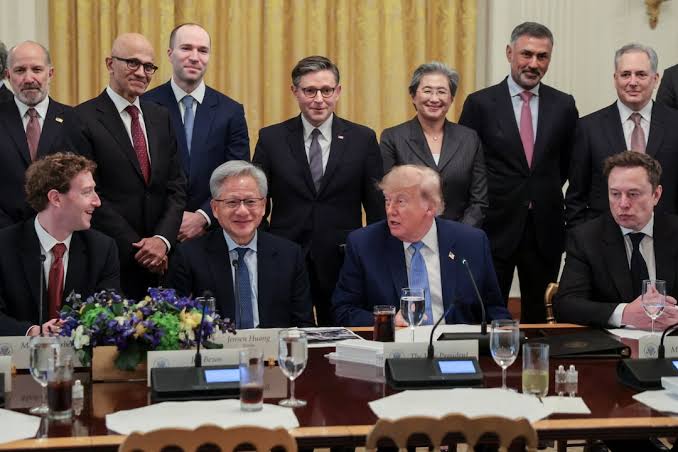
This announcement follows what the U.S. President described as a «historic agreement» reached at the White House with major tech companies regarding their responsibilities to American citizens. The new team will have a 120-day deadline to submit a detailed report to the President, outlining the risks, opportunities, and available government tools associated with this technology.
From Silicon Valley to Wall Street: The implications of the leadership change
The selection of Jay Clayton to lead this team carries deep implications, especially as he succeeds David Sacks, the prominent Silicon Valley investor who led the AI file until last March. While Sacks represented the direct link between the administration and the technology industry, Clayton brings a vastly different background spanning years as a protector of business and finance on Wall Street and at institutions like Goldman Sachs.
This change clearly indicates that the White House now treats AI as a strategic asset that must be protected from espionage, hacking, and theft, with a necessity to integrate it more rapidly and efficiently into the nation’s defense and intelligence capabilities.
China as a primary rival and the government regulation dilemma
China stands in the background of this strategic shift, as the competition today extends to data centers, energy, advanced computing, and open-source software, in addition to military and intelligence applications. In light of these challenges, the U.S. administration is seeking a delicate balance; it aims to counter security and cyber threats on one hand, while avoiding «excessive regulation» that could slow down American companies and hinder innovation in favor of competitors on the other.






💬 Share your opinion
We welcome constructive opinions and ask you to maintain politeness.
0 comments