Government Direction to Enforce Religious Neutrality in Danish Courts
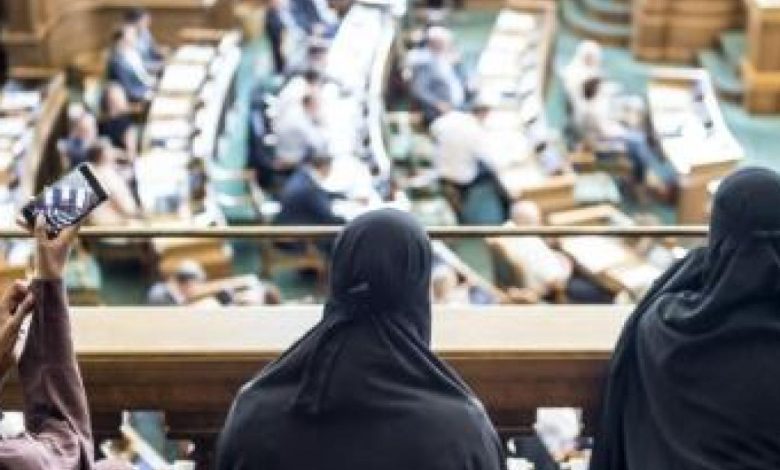
The Danish government is moving toward tightening measures regarding the wearing of religious symbols. Minister of Justice Nickolaj Wammen has announced a new government direction aimed at prohibiting prosecutors from wearing the hijab or any scarf with religious significance inside courtrooms. This step reopens the societal and political debate in the country regarding the hijab and the principle of religious neutrality within official judicial institutions.
According to international media reports, the upcoming regulations will oblige prosecutors, similar to professional judges, to display complete religious and political neutrality during their participation in various judicial sessions. The Minister of Justice justified this direction by the desire to ensure that prosecutors perform their duties with complete objectivity and impartiality, considering that courtrooms should remain free of any scarves or religious symbols.
Political Debate and Proposals Including Primary and Middle Schools
This judicial measure coincides with an escalating political debate in Denmark regarding another proposal aimed at banning the hijab in primary and middle schools. This proposal has the direct support of Prime Minister Mette Frederiksen, who previously stated that the hijab represents for her “an expression of oppression.”
However, the Prime Minister acknowledged the existence of legal and constitutional challenges and questions surrounding the feasibility of implementing such an actual ban, especially in a country where freedom of belief and expression are considered fundamental pillars of the democratic system.
Difference Between the New Measures and the 2018 Niqab Ban Law
It is worth noting that the current proposals differ fundamentally from the law that came into force in August 2018, which prohibited full face coverings (such as the niqab and burqa) in public spaces and imposed financial fines on violators. In contrast, the new directions focus on the traditional hijab, which does not cover the face, with the aim of establishing it as a standard for professional neutrality within certain vital state sectors.






💬 Share your opinion
We welcome constructive opinions and ask you to maintain politeness.
0 comments