
Why have car manufacturing giants backed away from touchscreens and brought back physical buttons to cabins?

A radical shift in the automotive industry towards traditional buttons
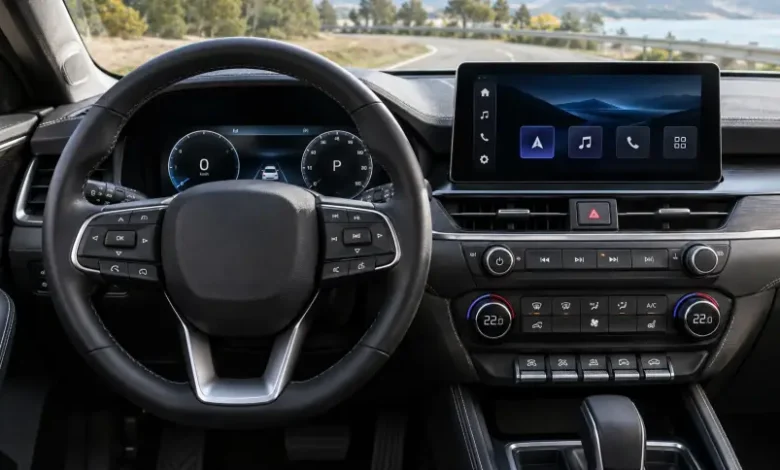
Global car manufacturers have begun backing away from over-reliance on touchscreens inside cabins, after digital control systems sparked widespread criticism from users due to the difficulty of using them while driving. This development represents a qualitative shift that brings traditional buttons and switches back to the forefront, as they are easier to use and less distracting for drivers on the road.
Ferrari and Volkswagen at the forefront of change
The Italian company Ferrari is among the most prominent names to adopt this technical change, deciding to return physical buttons to the steering wheels of its modern models, led by the “Amalfi” car, in response to customer feedback regarding touch controls. The historic company did not stop at new models, but also allowed owners of some of its previous cars, such as the “Purosangue” and “12Cilindri”, the option to replace digital controls with traditional buttons.
In the same context, the German group Volkswagen joined this trend by returning physical keys to control basic functions inside the electric “ID. Tiguan” model, including the air conditioning system, volume levels, and steering wheel buttons. Other companies, including Audi and Mercedes, have also begun reconsidering control system designs to combine modern digital technologies with the ease of direct use.
European safety standards drive this trend
This shift in cabin design coincides with the tightening of European safety standards; since the Euro NCAP program, starting in 2026, adopted new standards that give greater importance to the presence of physical and direct control tools for basic functions. These vital functions include turn signals, windshield wipers, warning lights, and the car horn.
The European program confirmed, in test results announced last October, that cars that provide clear and easily accessible buttons contribute directly to reducing the potential for driver distraction, compared to systems that rely absolutely on digital screens.
Mixed results in safety tests
European tests highlighted the superiority of some models in ease and speed of control, including cars like the “Audi Q7” and “Kia EV2”, versus weak results recorded in this aspect for models that rely excessively on touchscreens.
These data reflect the growing interest of traffic safety bodies in how drivers interact with vehicle equipment, moving beyond exclusive reliance on traditional protection methods alone.
Artificial Intelligence and the dual future of cabins
In a related context, car companies continue to develop voice assistants powered by artificial intelligence, which allow users to control navigation, music, and other equipment without needing to touch the screen.
However, this technical development does not completely eliminate the need for traditional buttons, especially for functions that require immediate and safe response, driving manufacturers to adopt balanced cabins that combine advanced screens and physical switches in vital areas that the driver constantly needs.






💬 Share your opinion
We welcome constructive opinions and ask you to maintain politeness.
0 comments