
Scientific study reveals link between chronic lower back pain, brain activity, and the ‘self-network’


A recent observational study using brain imaging has shown a marked increase in the activity of a network linked to self-reflection when pain is induced by movement in people with chronic lower back pain. The findings, published in the “British Journal of Anaesthesia” on October 5, 2026, shed light on the nature of the relationship between chronic back pain and the brain, though they do not identify a single cause for the pain nor prove the effectiveness of any new treatment.
Study details and participant sample
This observational study involved 114 people suffering from chronic lower back pain. Participants underwent a leg-raise test to induce pain during functional magnetic resonance imaging (fMRI), an advanced technique measuring cerebral blood flow. Participants recorded their pain intensity and discomfort on a scale from zero to ten, while researchers compared brain response during the test to that at rest.
What is the default mode network?
The default mode network includes interconnected brain regions primarily involved in self-reflection and processing internal thoughts and feelings; for this reason, it is sometimes known as the “self-network”. This term refers exclusively to its biological functions and does not imply that its activity reveals a patient’s personality or that personality traits explain their perception of pain.
Neuroimaging results and brain activity
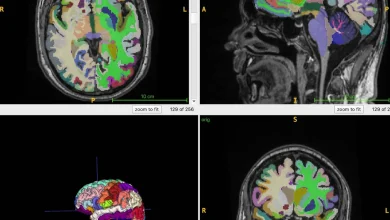
During movement-induced pain, researchers observed increased activity in regions associated with the self, pain, and movement. At rest, pain intensity was associated with increased synchronization of the self-network activity with another area that receives sensory input from the back, emphasizing that these observations do not prove the root cause of the pain or the presence of actual nerve damage.
Scientific implications and study limitations
The results confirm how the brain processes pain, but they do not mean that chronic lower back pain is imaginary or purely psychological. Because the study is observational, it cannot precisely determine the direction of the relationship, nor does it allow for diagnosing any person based solely on a brain scan. Furthermore, the sample of 114 people is considered insufficient to generalize the findings to all causes of back pain, and inducing pain inside a scanner does not explain how the condition started or persisted over time.
Therapeutic options and medical guidelines
These results alone are not sufficient to radically change chronic lower back pain treatment plans. In this context, the World Health Organization recommends providing individualized care that accounts for physical, psychological, and social factors in cases of chronic primary low back pain—pain lasting more than three months not attributed to a specific disease or condition. Care may include education programs, exercise, physical therapy, and psychological interventions alongside clinical assessments.
Important advice and signs requiring urgent medical intervention
Specialists advise discussing appropriate treatment options with the attending physician while maintaining an appropriate level of movement based on physical ability and avoiding prolonged bed rest. UK health services emphasize seeing a doctor immediately if pain persists or significantly impacts daily activities.
Regarding “red flags” associated with back pain, one should not automatically attribute new symptoms to brain changes; seek emergency care if symptoms appear such as loss of sensation around the genitals or anus, new difficulty urinating, loss of bowel or bladder control, or weakness and numbness in both legs. Urgent medical evaluation is also required if severe pain starts suddenly, worsens rapidly, or is accompanied by fever.





💬 Share your opinion
We welcome constructive opinions and ask you to maintain politeness.
0 comments