
Heated Legal Debate in Taza Over the Impact of the Provincial Council President’s Sentence on His Leadership Future

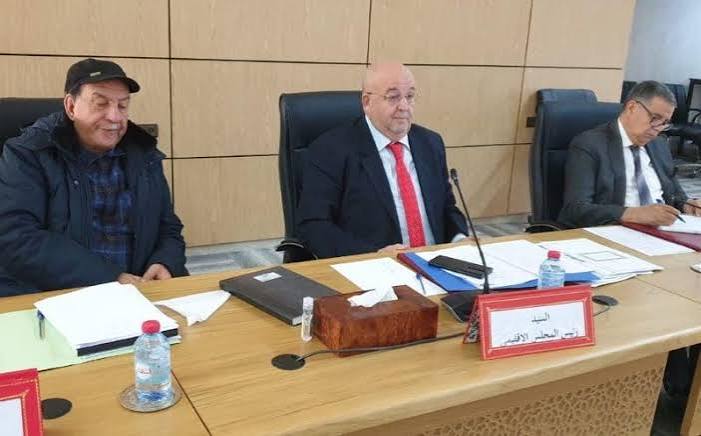
The return of the President of the Provincial Council of Taza to the spotlight has reignited a legal debate regarding the extent to which his six-month firm prison sentence affects his legal status within the elected institution. This discussion is intensifying in light of the precise provisions of the organic law related to prefectures and provinces, which govern cases of absence or interruption of the president’s duties.
The primary point of debate, according to information in circulation, revolves around whether the time spent in prison is a direct legal cause for terminating his duties as head of the council, or if the matter remains tied to specific and explicit conditions laid out by the Moroccan legislator.
In this context, Article 21 of Organic Law No. 112.14 carries significant weight, as it accurately defines the cases in which a council president is considered to be in a situation of interrupted duties, including detention exceeding six months.
The wording of this provision attracts special legal attention; given that the legislator did not use the phrase “six months or more,” but rather required that the duration of detention actually exceed the six-month threshold, this opens the door to legal interpretations distinguishing between serving exactly six months and exceeding that duration.
This case is closely linked to Article 22, which defines the legal consequences resulting from instances of interruption, and the potential impact on the continuity of the president and the council bureau, according to procedures established by law.
Conversely, Article 105 governs the temporary substitution of the council president in cases of temporary absence or any impediment preventing him from exercising his duties for more than a month, ensuring the normal functioning of the elected institution and preventing disruption to vital provincial interests.
From another analytical angle, the nature of the court ruling — which reportedly is a first-instance ruling in a case unrelated to the management of public provincial affairs — necessitates a precise distinction between the individual’s judicial status and the organizational consequences on the presidency of the Provincial Council.
Given these legal and practical considerations, it is evident that the controversy in Taza requires an objective and precise legal approach, far from preconceptions and hasty interpretations. Determining the final status of the council president requires a comprehensive review of all relevant legal provisions, rather than focusing solely on the prison term.
While awaiting a full clarification, the urgent question remains: Is his return to exercising his duties based on a sound legal footing, or are there other regulatory provisions that might cast a shadow over his continuity as President of the Provincial Council of Taza?




💬 Share your opinion
We welcome constructive opinions and ask you to maintain politeness.
0 comments