Massive Investments to Generalize Access to Drinking Water in Urban and Rural Areas
The Moroccan government intends to continue expanding drinking water supply networks, enhancing liquid sanitation projects, and reusing treated wastewater. These directions will be implemented through comprehensive investment programs, primarily the program to generalize access to drinking water during the period from 2026 to 2030, with a financial envelope of approximately 13.7 billion dirhams.
According to data from the draft finance law, the National Program for Drinking Water Supply and Irrigation (2020-2027) has successfully supplied water to 93 centers and 11,065 douars (villages), in addition to operating 186 monoblock seawater desalination and water purification stations, as part of efforts to enhance water resources.
Development of Liquid Sanitation Infrastructure and Wastewater Treatment
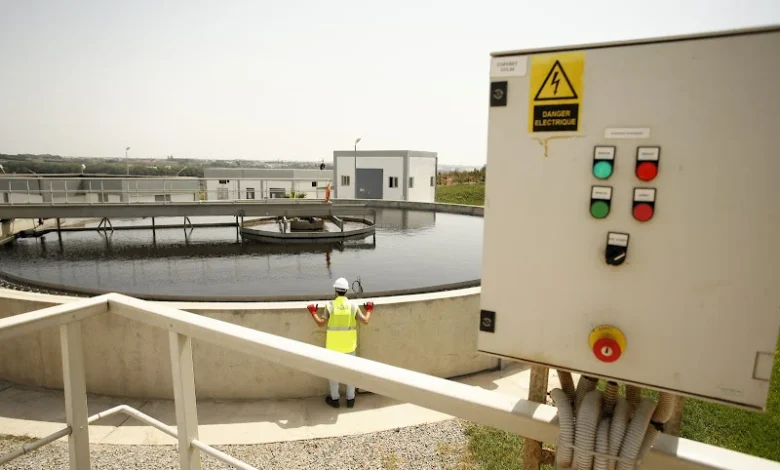
Official data indicates that the connection rate to the liquid sanitation network in urban areas reached 84.5 percent by the end of 2025. In the same context, the wastewater treatment and purification rate reached 58.5 percent, thanks to the operation of 227 treatment stations, compared to only 27 in 2006, reflecting the remarkable development in wastewater treatment infrastructure over the past two decades.
The programmed projects include the continued construction of pipelines to transport desalinated water from stations in Casablanca, Safi, Souss-Massa, the Oriental region, Rabat, and Tangier. These projects also prioritize securing the water supply for the city of Marrakech from the Safi station, enhancing water resources for Greater Casablanca, and completing projects to protect populations and territories from flood risks.
Programs to Support Water Supply in Rural Areas and Develop Integrated Sanitation
Regarding rural areas, the government plans to continue implementing the program to generalize access to drinking water (2026-2030) with a total cost of approximately 13.7 billion dirhams, of which 9.6 billion is directly funded by the state budget. The program aims to improve access to drinking water in areas lacking sufficient infrastructure. It is expected that the program will supply 225 centers with water through individual connections, as well as link 7,209 douars via public water fountains. In the liquid sanitation sector, authorities are focusing on accelerating the implementation of the National Program for Integrated Liquid Sanitation and Treated Wastewater Reuse (2025-2034) by equipping 68 cities and urban centers and 166 rural centers with the necessary infrastructure to collect and treat wastewater.





💬 Share your opinion
We welcome constructive opinions and ask you to maintain politeness.
0 comments