
Taourirt setback deepens the USFP crisis and escalates criticism against its leadership

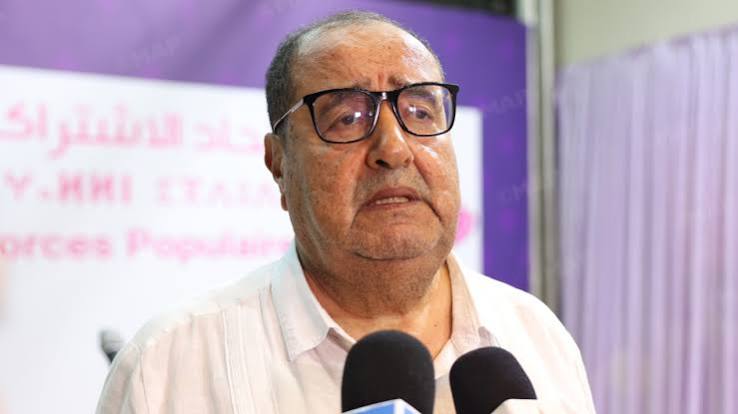
The First Secretary of the Socialist Union of Popular Forces (USFP), Driss Lachgar, is facing a growing wave of anger within the party’s structures following the disappointing results of the recent elections, which many party members view as a sign of a real organizational crisis afflicting the party.
Sharp criticism of the nomination management
The intensity of the criticism directed at the current leadership of the “Rose” party is directly linked to the way the nomination file was handled, a management style described by many disgruntled members as “individualistic” and “improvised,” which, according to them, led to counterproductive results in several important field stations.
The results in the Taourirt constituency came as a real shock to the party’s base; the Social Center Party candidate, Radouane Talghi, locally known as “Moul El Beid” (the egg man), managed to garner twice as many votes as the USFP candidate, despite the latter competing alongside his mother as the second person on the list. For many observers, this result is a clear indicator of the growing crisis of confidence the party is experiencing locally.
Previous voices warned about selection criteria
These field developments have brought back to the forefront the previous criticisms leveled by prominent party leaders, such as Manal Takal and lawyer Meriem Jamal Idrissi, who had previously announced her resignation from the party. These figures had warned the USFP leadership against the consequences of adopting financial criteria in the endorsement and selection of candidates, at the expense of militant and field competencies.
For his part, Driss Lachgar has denied these accusations on several occasions, emphasizing in previous statements that he relies on precise criteria and continuous coordination with local bases during the selection and endorsement process.
Electoral hemorrhage and demands for accountability
These successive organizational crises come at a time when the USFP is going through a difficult situation characterized by a noticeable national electoral decline; the party’s share in the legislative institution (House of Representatives) has decreased from 34 seats to 26.
Faced with this ongoing electoral “hemorrhage,” numerous voices from both the leadership and the base within the party are calling for an open and transparent discussion regarding the political and organizational responsibility of Driss Lachgar, emphasizing the importance of conducting a comprehensive evaluation of the party’s path, especially given the large gap revealed by the field results between the official discourse of the leadership and the lived electoral reality.





💬 Share your opinion
We welcome constructive opinions and ask you to maintain politeness.
0 comments