
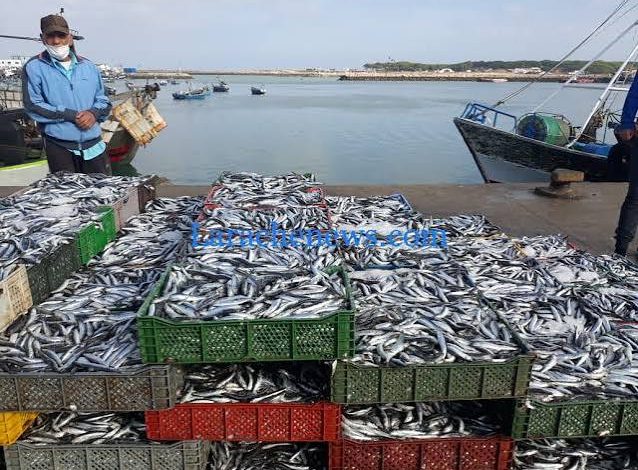
Rising dynamics in maritime activity at the Port of El Jadida
The Port of El Jadida, along with the Port of Jorf Lasfar, is witnessing a phase of remarkable recovery in its maritime production system this year. These positive results are due to the recovery of several key fisheries that form the backbone of the local economy, most notably small pelagic fish, seaweed, and octopus, which has recorded an exceptional performance in terms of financial value.
Encouraging figures in the pelagic fish sector
According to data recorded up to the end of August, landings of small pelagic fish reached about 1,800 tons, generating a financial value of approximately 9.7 million dirhams. This category mainly includes sardines, anchovies, mackerel, and horse mackerel. These figures are a strong indicator of a return to normal activity levels, with the sardine playing the most prominent role in boosting revenues and stimulating local and export markets.
Seaweed and octopus: pillars of the region’s maritime economy
The role of the Port of El Jadida is not limited to fish, but extends to the seaweed sector, where professionals have managed to land about 80 percent of the allocated annual quota, which amounts to 16,333 tons of wet seaweed. This achievement solidifies the region’s position as a key national hub for this vital economic activity.
On the other hand, octopus fishing has recorded notable figures, with about 456 tons landed, valued at nearly 39 million dirhams. This added value underscores the strategic importance of this mollusk in supporting the turnover of the fishing sector in the province and the region as a whole, contributing directly to improving the income of professionals and promoting local economic development.
The Port of El Jadida as a center for economic development
The Port of El Jadida stands out clearly as one of the most important landing points in the region, playing a fundamental role in transforming raw marine resources into tangible economic value. This report confirms that investment in port development and fishery monitoring effectively contributes to food security and the creation of direct and indirect jobs, cementing the province’s role as a key player in the national fishing strategy.







💬 Share your opinion
We welcome constructive opinions and ask you to maintain politeness.
0 comments