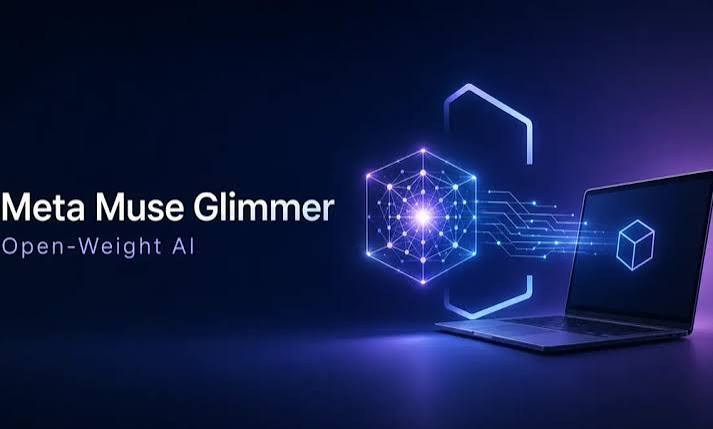
In a bold strategic move, Meta has decided to change the rules of the game in the world of artificial intelligence with the launch of its new model, Muse Glimmer. This innovation represents a radical shift in how we interact with intelligent technologies; the user is no longer forced to rely on the servers of giant corporations, as they can now shift massive processing power directly into their personal computer.
Artificial intelligence that frees you from the “cloud”
The Muse Glimmer model, featuring nearly 30 billion parameters, confirms that the future is trending toward “local intelligence.” This model is designed to operate with high efficiency using only one graphics card, giving it exceptional flexibility. Unlike traditional models that are limited to answering text, this version is designed to be an “intelligent agent” capable of planning, writing code, and executing a continuous series of complex digital tasks.
Technical advantages: Privacy and cost savings
Running AI locally on the user’s device offers benefits that go beyond just response speed. For developers and companies, this means the ability to protect sensitive data and keep it within their own infrastructure, rather than sending it to external cloud services. Furthermore, this approach reduces reliance on paid APIs, saving significant operational costs, especially in applications that require intensive, repeated operations.
Mark Zuckerberg’s bet: Openness to counter monopoly
Meta didn’t stop there; Mark Zuckerberg announced that the weights for the Muse Spark 1.2 version are available to developers—a more powerful model dedicated to tasks requiring high precision. This step comes in the context of the current “model war” between giants like OpenAI and Anthropic. While these companies keep their models behind closed walls, Zuckerberg is betting on making advanced AI tools “open source” so they are available to everyone.
Zuckerberg defends his vision that expanding access to technology is the only guarantee to prevent power from concentrating in the hands of a few institutions. Despite the ongoing global debate over the balance between open innovation and digital security standards, it seems Meta has made its decision: the future of artificial intelligence should be in the hands of developers and users, not locked away in massive data centers.







💬 Share your opinion
We welcome constructive opinions and ask you to maintain politeness.
0 comments