
Implications of Fouzi Lekjaa’s exit from the Finance Committee: What does the Moroccan presence in “CAF” look like?

Shifts within the wheels of “CAF”: Morocco in development committees, away from decision-making centers
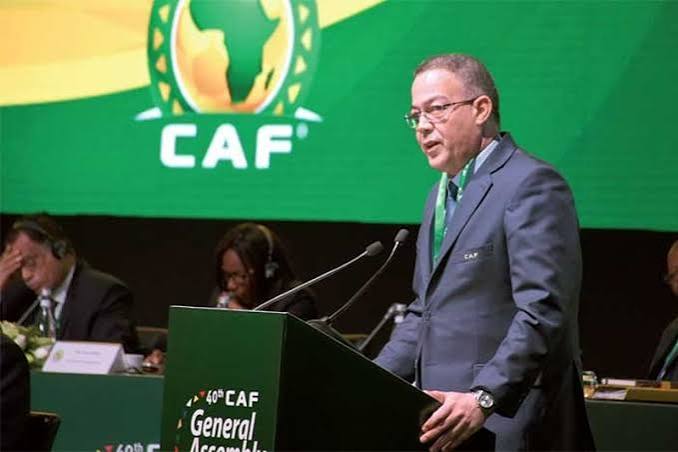
The work of the 48th General Assembly of the Confederation of African Football (CAF), hosted by Abuja, presented a contrasting scene regarding the scale of Moroccan presence within the structures of the continental body. While Moroccan talents succeeded in maintaining a foothold in development committees, absence remains dominant in committees of a decisive and disciplinary nature.
Map of Moroccan Representation: A weighty presence in planning
Moroccan sports succeeded in securing 4 seats within the standing committees, which observers considered an extension of Morocco’s qualitative presence within the machinery of the African union. Foremost among these names is Taha Mansouri, who won the presidency of the Futsal and Beach Soccer Development Committee, a task considered the most prominent in the new line-up.
Moroccan representation also included the presence of Abdellatif Mokhtarid in the Club Competitions Committee under the chairmanship of Ghana’s Kurt Okraku, and Fathi Jamal within the Technical Development Committee supervised by Samuel Eto’o, in addition to Azzedine Yacoubi as a member of the Youth Committee.
Absence from decision-making hubs: Questions follow the new line-up
In contrast, the continued absence of Moroccans from sensitive and decisive committees has raised questions in sports circles, especially those related to the “decision-making kitchen” within CAF. Morocco remains outside the structure of the Disciplinary Committee and the Appeals Committee, in addition to the Referees Committee, which is considered one of the most influential bodies in the course of continental competitions.
This situation comes in a context that accompanies Fouzi Lekjaa’s departure from the acting presidency of the Finance Committee, a position currently held by Zambia’s Andrew Kamanga, deepening the feeling of a decline in Moroccan influence in committees that decide on disciplinary files and major disputes.
Between strategic decline and anticipation: Readings of the scene
This composition opens the door to multiple hypotheses in sports analysis; while some see this distribution as a decline in Moroccan influence in refereeing and disciplinary committees, another analysis tends to consider it a “strategic choice.”
Proponents of this view suggest that this distribution might be temporary, pending expected updates that may occur in decisive committees in the coming months, especially with the approach of the 2027 Africa Cup of Nations, which could rearrange the cards of the Moroccan presence in a way that serves the strategic interests of the Kingdom within the continental body.




💬 Share your opinion
We welcome constructive opinions and ask you to maintain politeness.
0 comments