
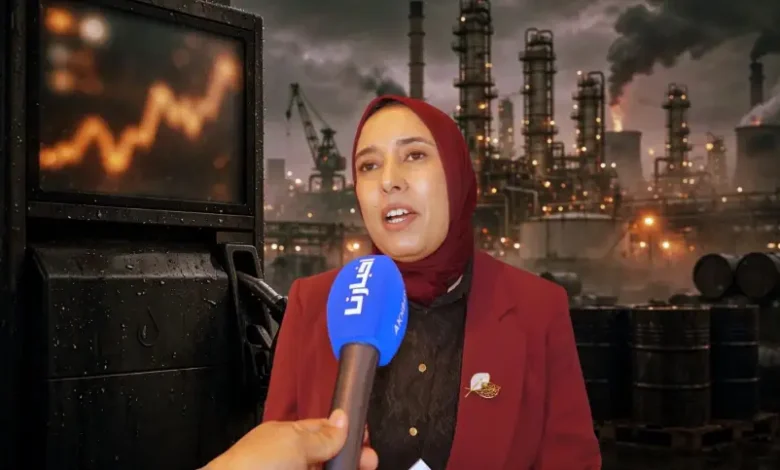
The political and media landscape in Morocco has seen an intense debate over the past few days between leaders of the Authenticity and Modernity Party (PAM) and the Justice and Development Party (PJD), focusing on the underlying motives for the recent surge in fuel prices at gas stations.
Context of the controversy
The dispute was triggered by a post from Soufiane Khallihana, a member of the PAM’s national council, responding to statements made by PJD leader and MP Amina Maelainine. Maelainine had linked the rise in fuel costs to the government’s intention to revise taxes on companies operating in the fuel sector—a claim the PAM official sought to refute using tax data and figures from the international market.
Fiscal clarifications
Khallihana clarified that it is illogical to connect fiscal implications starting in early 2027 to price hikes recorded in November 2026. He emphasized that the government measure in Article 19 of the draft Finance Bill does not target the retail price for consumers, but rather the net profits of companies with taxable earnings of at least 100 million dirhams, by raising the rate from 35% to 40%. The tax base is thus linked to net profit, not the volume of sales.
He stressed the fundamental difference between a direct tax on retail prices, which immediately impacts purchasing power, and a tax on net profits after deducting costs, asserting that current prices cannot be justified by a tax on future earnings.
International market factors
Regarding the real reasons for the rise in diesel prices, the source pointed to international market developments, explaining that the price of refined diesel on the Rotterdam exchange recorded a notable increase in October, influenced by tensions around the Strait of Hormuz and increased European demand for heating oil as winter approaches.
The PAM official concluded by emphasizing that Morocco’s dependence on imported refined products makes local prices highly sensitive to global market volatility, suggesting that these pressures will likely persist until new refining capacities enter the international market.







💬 Share your opinion
We welcome constructive opinions and ask you to maintain politeness.
0 comments