
Artificial Intelligence Issues and Their Impact on Cybersecurity Strategies for Moroccan Institutions

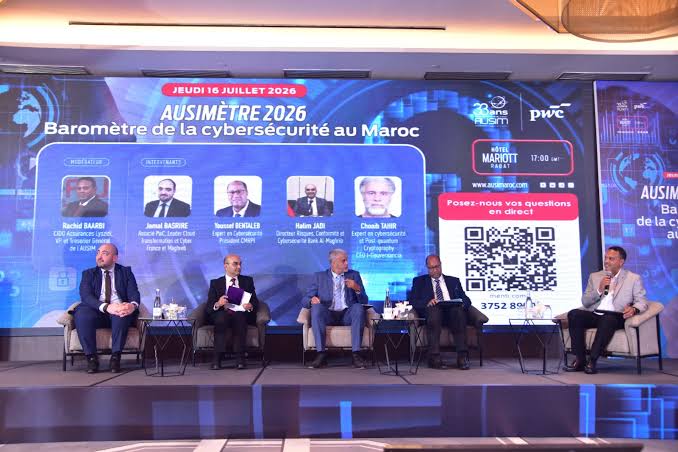
In light of the rapid digital transformation underway in Morocco, cybersecurity investments have become a cornerstone for ensuring business continuity and protecting sensitive data. The 8th conference of the Association of Information Systems Users in Morocco (AUSIM), held in Tangier, delivered a clear message: launching initiatives is no longer sufficient without adequate funding. Cybersecurity must transition from a traditional expense to a strategic investment that protects organizations from severe material and moral losses.
Field Protection Challenges vs. International Indicators
Despite Morocco’s top-tier ranking in the 2024 ITU Global Cybersecurity Index, real-world events in 2025 have revealed persistent vulnerabilities. General Abdellah Boutarik, Director General of the General Directorate for Information Systems Security (DGSSI), explains that international indicators measure national maturity rather than the actual protection level of individual information systems. This means cybersecurity investments in Morocco must translate into tangible measures rather than resting on theoretical rankings.
Strategic Investment and the Human Element
Experts emphasize that the traditional view of cybersecurity as a cost center must change. Every dirham invested in cyber protection reduces the likelihood of attacks and avoids potential losses in the millions. General Boutarik notes that cybersecurity prevents incidents from escalating into structural crises. Furthermore, Mounia Sanhaji, a cybersecurity expert, highlights that investing in technology alone without the human element—the first line of defense—is a waste of resources.
AI and the Decision-Making Dilemma
With the rise of AI, new challenges have emerged. While attackers use these tools for sophisticated phishing, defenders can use them to detect threats quickly. However, the question remains: who is responsible for AI-driven decisions? Omar Seghrouchni, President of the CNDP, warns against the “exportation of decision-making mechanisms,” cautioning that excessive reliance on AI could lead to a loss of control over crucial decisions, emphasizing that this is a societal and civilizational issue, not just a technical one.
Digital Sovereignty and Building the National Future
Cybersecurity investments go beyond purchasing off-the-shelf solutions; they raise the question of digital sovereignty. Amine Mounir Alaoui, Director General of the Digital Development Agency (ADD), stresses the importance of control, ability to choose, and, when necessary, local production. This requires balanced partnerships and the development of national solutions. Mohammed Saad, President of AUSIM, concludes: “We can buy technology and rent cloud space, but we cannot import our ability to think, make decisions, and create our digital future.”






💬 Share your opinion
We welcome constructive opinions and ask you to maintain politeness.
0 comments